
If you're reading this, you're probably about to do one of the most uncomfortable things an adult ever does: walk into a room full of strangers, in clothes you've never worn, and ask people to teach you something you've never tried.
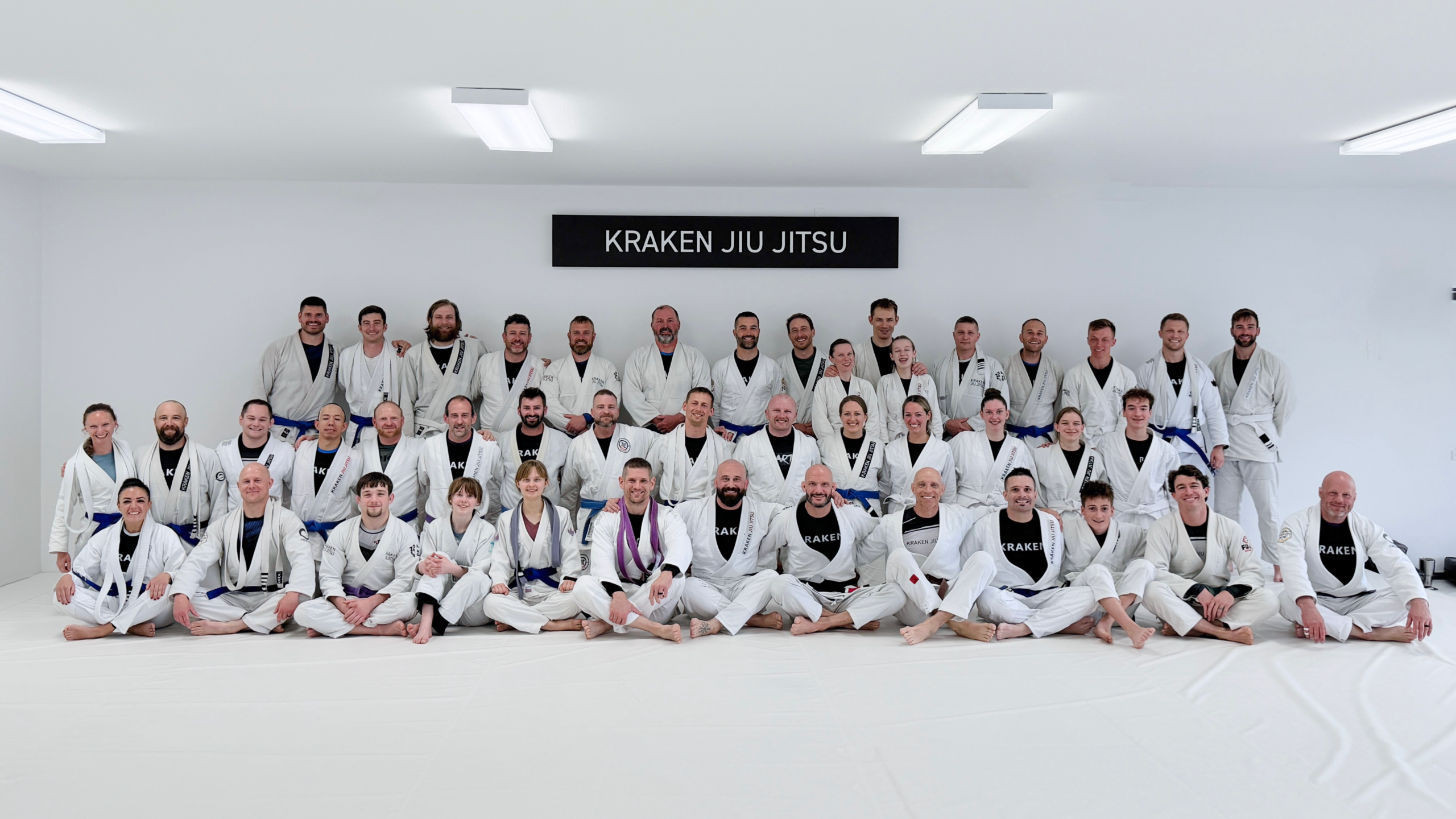
Take a breath. Every single person training at Kraken Jiu Jitsu in Belmont (and at our Cadillac location) was in your shoes. Most of them remember the exact day. And nearly all of them say the same thing afterward: "I wish I'd done this years ago."
Here's a clear, no-fluff breakdown of what your first Brazilian Jiu Jitsu class will actually be like — what to wear, what to bring, what to expect — so you can show up calm and ready to learn.
What to wear to your first BJJ class
For your very first class, you don't need to own a gi (the traditional uniform). We'll loan you one. If your class is a "nogi" you can wear:
- A snug-fitting athletic t-shirt (rashguards are ideal, but a regular workout shirt works fine)
- Athletic shorts without pockets, zippers, or buttons (basketball shorts with a drawstring are perfect; board shorts work; cargo shorts do not)
Finally, no shoes on the mat — bring sandals or slip-ons for walking off the mat to the bathroom or water fountain
Once you decide to keep training, we'll get you set up with a proper gi and a Kraken rashguard. Plenty of time for that.
What to bring
A water bottle. A towel if you sweat a lot. That's it.
Leave the jewelry at home — earrings, rings, necklaces, watches all come off before stepping on the mat. Trim your fingernails and toenails. If you have long hair, tie it back. These aren't arbitrary rules; they're how we keep training partners from getting scratched, jabbed, or pulled.
What actually happens in your first class
Most first classes follow the same shape:
1. You'll be greeted and shown around. Bathrooms, water, where to leave your shoes, where to line up. We're a friendly room — you won't be ignored.
2.
Warm-up. Light movement to get your body ready. Shrimping, bridging, simple drills. Don't worry about looking smooth; nobody did on day one.
3. Technique of the day. The instructor demonstrates a position or move, breaks it down step by step, and then everyone partners up to drill it. You'll be paired with someone who knows what they're doing — usually a more experienced student or coach who will walk you through it slowly.
4. Live training (sparring), or "rolling." This is where you take turns trying to apply techniques against a resisting partner. **You will not be thrown into hard sparring on day one.** New students typically watch, do extra drilling, or roll with a coach at a slow, controlled pace designed to teach you, not test you.
5. End-of-class line up and slap-bump. Quick thank-you to your partners, mat is bowed off, class is done.
The whole thing takes about an hour. You'll be tired in a way that feels different from the gym — more puzzle-solving than weightlifting.
The fears almost every beginner has (and why they're overblown)
"I'll get hurt." Jiu Jitsu has a strong safety record because the entire sport is built around tapping out. If something hurts or feels wrong, you tap, your partner stops immediately, and you reset. There's no punching to the face, no head trauma, no slamming. Beginners get put with people who know how to control the pace.
"I'm not in good enough shape." You don't get in shape and then start BJJ. You start BJJ and get in shape. Our adult class regularly includes everyone from twenty-somethings to people in their fifties and sixties. Pace yourself, breathe, take breaks — that's encouraged, not frowned on.
"I don't want to be the worst person there." You will be. So was everyone else on their first day. Nobody cares. The culture at our academy is built around helping new people, not testing them. If anyone treats you poorly, that's on them and we'll know about it.
"I'm too old / too small / too out of shape / female / introverted." We train kids, teens, men, women, parents, grandparents, athletes, and people who haven't worked out in a decade. BJJ was built specifically so a smaller person could defend against a bigger one. Size and athleticism help less than you'd guess; consistency helps more than you'd guess. You can read what some of our students say in our testimonials.
Why Kraken specifically
Grand Rapids has a few BJJ options. A few things are worth knowing about ours before you choose:
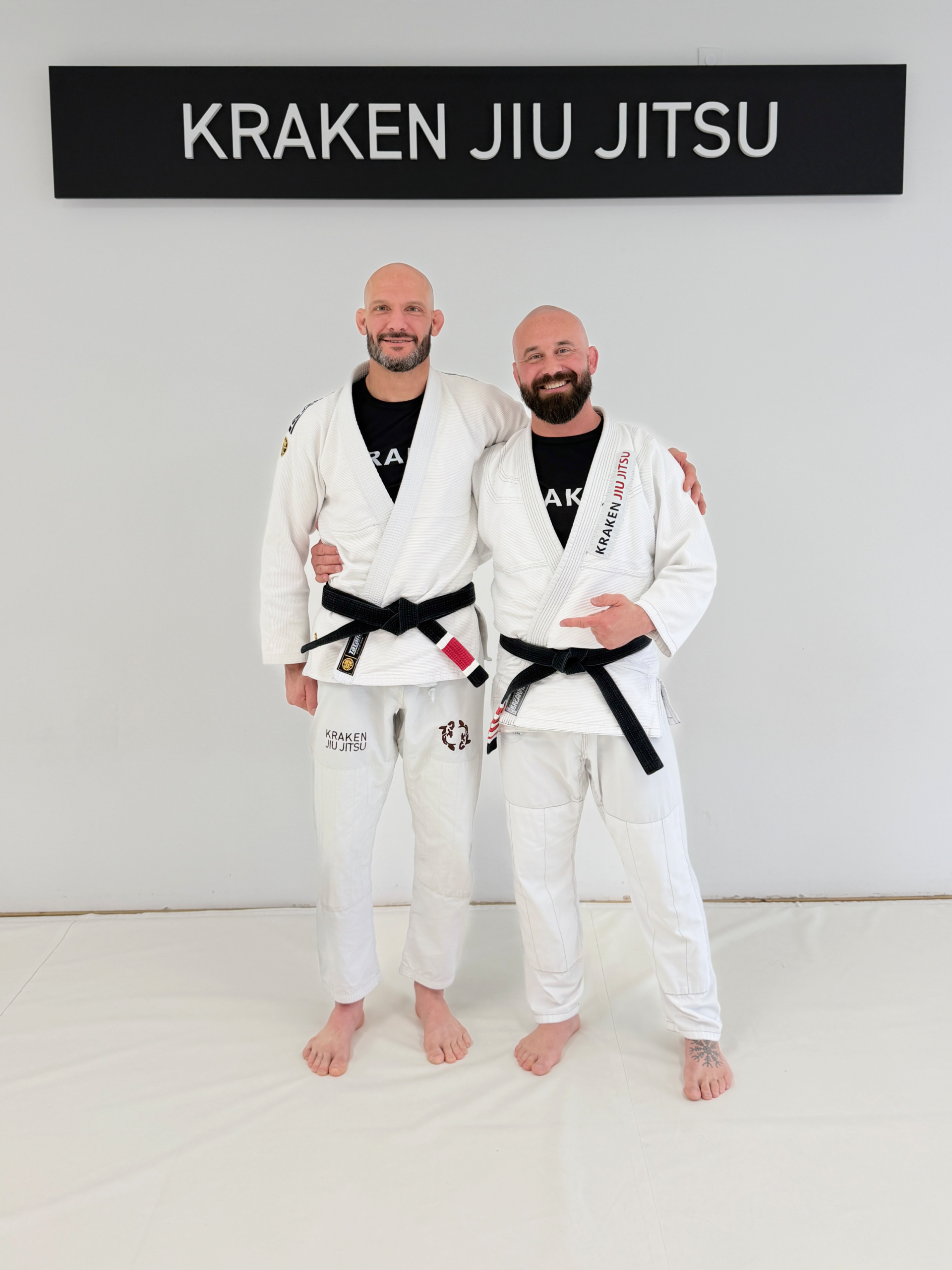
Professor Tony, our head instructor, is the only IBJJF-certified black belt from West Michigan. He's trained under Professor Rodrigo Pinheiro and brings 30+ years of martial arts experience. That matters because the quality of your first instructor shapes how fast and safely you progress.
We're a sponsor gym for the We Defy Foundation, supporting combat-disabled veterans on the mat at no cost to them. That tells you something about the room you're walking into.
Our facility in Belmont is the most modern BJJ academy in West Michigan, with a separate Cadillac location for students up north. Class times are built around real schedules — early mornings, evenings, weekends. You can see the full class schedule here and our program options here.
Your first class is on us
The hardest part of starting Jiu Jitsu is the drive over. Once you're inside, you'll be greeted, partnered up, taught something useful, and walked through everything above. By the end of the hour, you'll know whether this is for you. Most people know within ten minutes.
We offer a free trial class so you can see what it's like before committing. No pressure, no awkward sales pitch afterward — just an hour of training to find out if BJJ fits your life.
Reserve your first class at Kraken Jiu Jitsu
We'll see you on the mat.
